


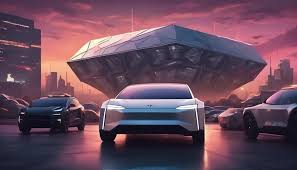
The worlds of the Pentagon, Big Tech, and the Tesla Cybertruck might sound like they belong to entirely different universes. One represents military power and national defense, another symbolizes digital dominance and global influence, while the last looks like it drove straight out of a sci-fi movie. But here’s the twist: these three forces are increasingly intertwined. And that intersection tells us a powerful story about where technology, security, and society are headed.’

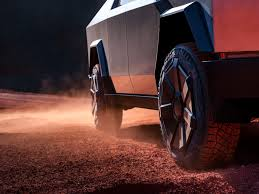
In today’s world, innovation doesn’t stay neatly in one box. A vehicle designed for civilians can spark military interest. A tech company built for social media can become a defense contractor. And a pickup truck made of stainless steel can suddenly raise questions about cybersecurity, surveillance, and warfare. The Tesla Cybertruck isn’t just a car; it’s a symbol. Big Tech isn’t just about apps; it’s about power. And the Pentagon? It’s no longer just about tanks and jets—it’s about data, AI, and energy efficiency.
So why are these keywords—Pentagon, Big Tech, Tesla Cybertruck—showing up in the same conversations? Because the future of defense, mobility, and technology is converging faster than most people realize. Let’s unpack this collision and explore what it really means, not just for governments and corporations, but for everyday people like you and me.
Understanding the Pentagon’s Role in Modern Technology
The Pentagon has always been a driver of technological change, even if most people don’t realize it. The internet? Born from a defense project. GPS? Military origins. Even voice assistants and touchscreen technology trace parts of their lineage back to defense research. In the modern era, the Pentagon isn’t just interested in weapons—it’s interested in systems, data, and speed.
Today’s conflicts aren’t fought only with missiles and soldiers. They’re fought with information, algorithms, and infrastructure. The Pentagon understands that whoever controls data and computing power holds a massive strategic advantage. That’s why it actively seeks partnerships with private companies that can innovate faster than traditional defense contractors.

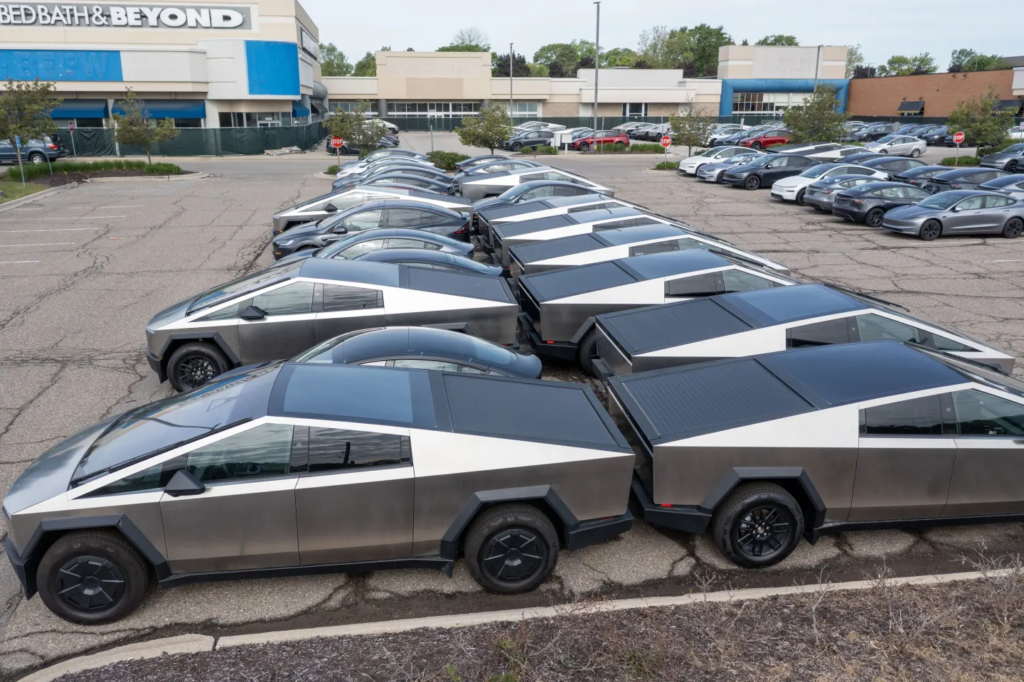
What’s different now is the pace. Big Tech moves fast—sometimes too fast for government processes. But the Pentagon knows it can’t afford to lag behind. Adversaries are investing heavily in AI, cyber warfare, and autonomous systems. To stay ahead, the Pentagon has to look beyond its own labs and into the commercial world.
This shift explains why companies like Tesla, Google, Amazon, and Microsoft keep popping up in defense-related discussions. The Pentagon isn’t chasing trends; it’s chasing survival in a digital battlefield. And that battlefield increasingly looks like a data center, not a desert.
The Rise of Big Tech as a Strategic Partner
Big Tech didn’t set out to become a defense ally—but here we are. Companies that once focused on search engines, social media, and e-commerce now find themselves at the center of national security conversations. Cloud computing, artificial intelligence, and big data analytics are no longer “nice to have.” They’re mission-critical.
The Pentagon needs secure cloud infrastructure to process massive amounts of information in real time. It needs AI to analyze surveillance data faster than any human ever could. And it needs cybersecurity expertise to defend against constant digital attacks. Big Tech excels in all these areas.
But this partnership isn’t without controversy. Employees at some tech companies have protested defense contracts, arguing that their work shouldn’t contribute to warfare. Others see it differently, believing that strong defense technology can prevent conflict rather than escalate it.
Either way, the reality is clear: Big Tech now sits at the same table as generals and policymakers. And when a company like Tesla enters the conversation, things get even more interesting—because Tesla doesn’t just deal in software. It deals in physical, mobile, connected machines.

Tesla as More Than a Car Company
If you still think of Tesla as “just a car company,” you’re missing the bigger picture. Tesla is a technology company that happens to make vehicles. Its real strengths lie in software, energy systems, AI, and manufacturing efficiency. That’s exactly why governments, including the Pentagon, pay attention.
Tesla’s vehicles are rolling computers. They collect data, receive over-the-air updates, and integrate advanced sensors. From a defense perspective, that’s fascinating. A platform that combines mobility, energy efficiency, and software control opens doors to applications far beyond civilian driving.
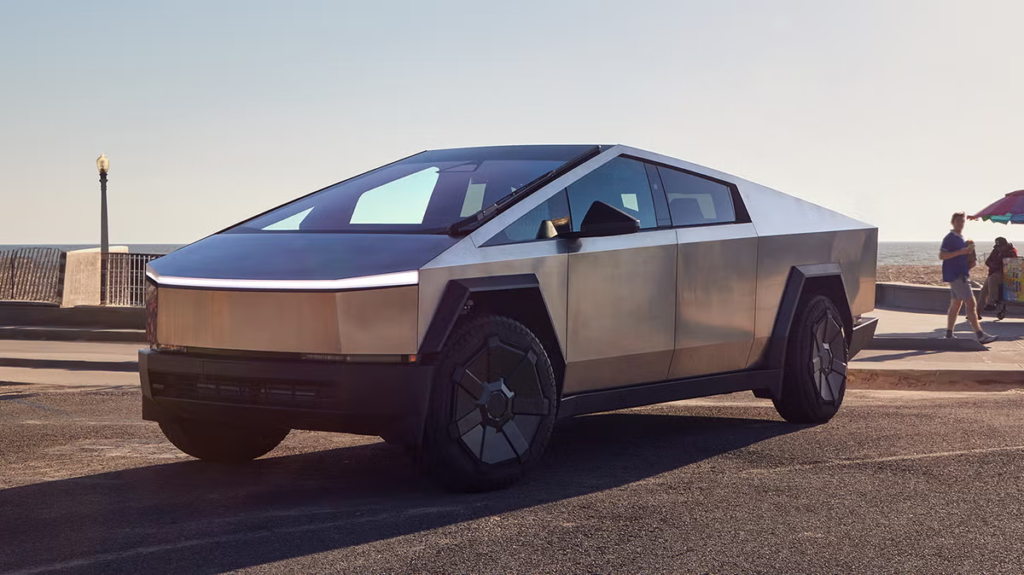
The Tesla Cybertruck, in particular, pushes boundaries. Its unconventional design, durable materials, and electric drivetrain challenge traditional assumptions about what a vehicle can be. For a military always looking for rugged, adaptable transport, that naturally raises eyebrows.
Tesla’s approach also disrupts supply chains and manufacturing norms. The company builds differently, thinks differently, and moves faster. That kind of mindset aligns surprisingly well with modern defense needs—even if Tesla itself doesn’t actively pursue military contracts.
The Tesla Cybertruck: A Radical Redesign of Mobility
The Tesla Cybertruck looks like nothing else on the road, and that’s not an accident. Its angular design and stainless steel exoskeleton aren’t just aesthetic choices—they’re functional decisions. Durability, simplicity, and strength define the Cybertruck’s identity.
From a purely technical standpoint, the Cybertruck offers impressive performance: high torque, off-road capability, and a robust structure. Its electric nature means fewer moving parts, lower maintenance, and the ability to operate with alternative energy sources. For military logistics, those features are incredibly appealing.
But the Cybertruck also raises questions. How secure is its software? How vulnerable is it to hacking? Can a connected vehicle be trusted in high-risk environments? These are exactly the kinds of questions the Pentagon and defense analysts are asking.
Whether or not the Cybertruck ever sees direct military use, its design philosophy influences how future vehicles—civilian and military alike—are imagined. It represents a shift away from tradition and toward something bold, experimental, and deeply technological.

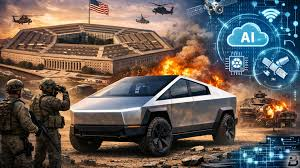
Why the Pentagon Is Interested in Commercial EVs
Electric vehicles aren’t just about climate change or fuel savings. For the Pentagon, EVs represent strategic flexibility. Traditional fuel supply lines are vulnerable. They require constant protection and logistics. Electricity, on the other hand, can be generated in multiple ways, including renewable sources in remote locations.
Imagine a military base powered by solar panels and battery storage, charging electric vehicles on-site. That reduces dependence on fuel convoys and increases operational security. EVs also produce less noise and heat, which can be critical in certain tactical situations.
Commercial EVs like the Tesla Cybertruck provide a testing ground. They allow the military to observe how electric platforms perform in real-world conditions without investing billions upfront. Lessons learned from civilian use can inform future military designs.
This interest doesn’t mean the Pentagon is about to replace all Humvees with Cybertrucks. But it does mean that the line between civilian and military technology is thinner than ever.

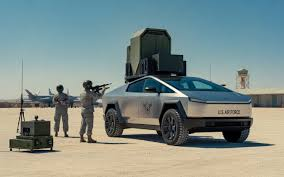
Big Tech, AI, and Defense Infrastructure
Artificial intelligence is the backbone of modern defense strategy, and Big Tech leads the AI race. From image recognition to predictive analytics, AI helps the Pentagon process overwhelming amounts of information quickly and accurately.
Cloud infrastructure allows data from drones, satellites, and sensors to be analyzed in near real time. Big Tech companies provide the scale and expertise needed to make that possible. Without them, modern defense systems would grind to a halt.
Tesla also plays a role here. Its work on autonomous driving relies heavily on AI, computer vision, and neural networks. While designed for civilian roads, these technologies have obvious dual-use potential. Autonomous navigation, obstacle detection, and decision-making systems are just as relevant on a battlefield as they are on a highway.
This convergence of AI, Big Tech, and defense raises important questions about control, accountability, and ethics—questions society is only beginning to grapple with.
Cybersecurity Concerns Around Advanced Vehicles
Connected vehicles are data machines on wheels. They collect location data, sensor data, user behavior, and system diagnostics. That data is valuable—and vulnerable. From a cybersecurity perspective, this is both an opportunity and a risk.
For the Pentagon, any technology considered for use must meet extremely high security standards. A hacked vehicle isn’t just inconvenient; it’s dangerous. That’s why the idea of using commercially connected vehicles like the Tesla Cybertruck in sensitive environments sparks intense debate.
Big Tech companies face similar scrutiny. Their systems are constant targets for cyberattacks. Partnering with the Pentagon means elevating security protocols to an entirely new level.
The upside is that this pressure drives innovation. Stronger encryption, better intrusion detection, and more resilient systems benefit everyone—not just the military. In that sense, defense-driven cybersecurity advancements often trickle down to civilian life.