





Weather Tech: Smart Technology Shaping the Future of Weather Monitoring

In today’s fast-changing world, accurate weather information is more important than ever. From agriculture and aviation to daily travel and disaster preparedness, weather tech plays a critical role in how we understand and respond to environmental conditions. Weather tehnology has evolved far beyond basic forecasts, combining data science, sensors, AI, and real-time analytics to deliver precise and actionable insights.
What Is Weather Tech?
Weather tech refers to modern technologies used to collect, analyze, and predict weather patterns. This includes hardware like sensors and satellites, as well as software systems powered by artificial intelligence, machine learning, and big data.
Unlike traditional forecasting methods, weather tech focuses on:
- High-resolution data
- Real-time monitoring
- Predictive modeling
- Hyper-local forecasts
These innovations help industries and individuals make better, faster decisions.
How Weather Tech Works
Weather teh systems collect massive amounts of data from multiple sources, including:
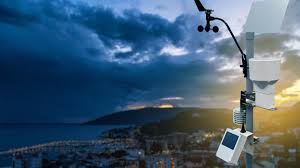
- Weather stations
- Satellites
- Radar systems
- IoT-enabled sensors
- Drones and ocean buoys
This data is then processed using advanced algorithms that analyze patterns, detect anomalies, and generate accurate forecasts. AI-powered models continuously learn from new data, improving accuracy over time.
Key Applications of Weather Tech

Agriculture
Farmers use weather tch to monitor rainfall, temperature, soil moisture, and frost risk. This helps optimize irrigation, protect crops, and improve yields.
Transportation and Aviation
Airlines and logistics companies rely on weather tech to ensure safety, reduce delays, and optimize routes. Accurate forecasts help avoid turbulence, storms, and hazardous conditions.
Disaster Management
Early warning systems powered by weather tech can predict floods, hurricanes, heatwaves, and storms. This allows governments and communities to prepare and reduce damage.
Renewable Energy
Solar and wind energy production depends heavily on weather conditions. Weather tech helps predict energy output and manage power grids efficiently.
Benefits of Advanced Weather Tech
Modern weather tech offers several advantages:
- Higher forecast accuracy
- Faster response to extreme weather
- Reduced economic losses
- Improved public safety
- Better planning for businesses
By using real-time data, weather tch reduces uncertainty and improves decision-making.
The Role of AI in Weather Tech
Artificial intelligence has transformed weather tech by:
- Processing complex climate data
- Improving long-term climate predictions
- Detecting weather trends earlier
- Providing hyper-local forecasts
AI-driven weather models can analyze years of historical data in seconds, making forecasts more reliable than ever before.

Weather Tech and Climate Change
As climate change increases weather unpredictability, weather tech becomes even more essential. Advanced monitoring tools help scientists track climate shifts, rising temperatures, and extreme events, supporting better policy and adaptation strategies.
Future Trends in Weather Tech
The future of weather teh is focused on:
- Greater use of AI and machine learning
- More accurate microclimate forecasting
- Expansion of smart sensors and IoT devices
- Integration with smart cities and vehicles
These innovations will make weather information more personalized and actionable.
Evolution of Weather Tech
Weather forecasting once relied on basic observation tools such as thermometers and barometers. Over time, the introduction of satellites and radar transformed forecasting accuracy. Today, weather tech represents the next evolution, integrating digital platforms, AI models, and real-time data streams.
Modern weather tech can:
- Analyze massive datasets in seconds
- Predict extreme weather events earlier
- Provide street-level forecasts
- Adapt predictions continuously
This evolution has made weather predictions more reliable than ever.
Core Components of Weather Tech
1. Sensors and IoT Devices
Smart sensors collect temperature, humidity, wind speed, rainfall, and air pressure data. IoT connectivity allows this data to be transmitted instantly to cloud-based platforms.
2. Satellites and Radar Systems
Satellites monitor cloud movement, ocean temperatures, and atmospheric changes, while radar systems detect storms, precipitation, and wind patterns.
3. Data Analytics Platforms
Weather tech platforms use big data analytics to process information from millions of data points, turning raw data into actionable insights.
4. Artificial Intelligence and Machine Learning
AI models identify patterns that humans cannot easily detect. Machine learning continuously improves forecasts by learning from historical and real-time data.
Industries Transformed by Weather Tech
Agriculture and Farming
Weather tech helps farmers plan planting schedules, protect crops from frost, manage water resources, and reduce losses caused by unexpected weather shifts.
Smart Cities
Cities use weather tech to manage traffic, prevent flooding, monitor air quality, and prepare emergency services for extreme conditions.
Insurance and Risk Management
Insurance companies rely on weather tech to assess risk, process claims faster, and price policies accurately based on regional climate data.
Construction and Infrastructure
Accurate forecasts reduce downtime, improve worker safety, and protect materials from weather damage.
Hyper-Local Forecasting: A Game Changer
One of the biggest advancements in weather tech is hyper-local forecasting. Instead of city-wide predictions, weather tech can now provide forecasts for specific neighborhoods or even individual streets.
Benefits include:
- Better planning for outdoor events
- Improved safety for commuters
- Precise alerts for storms or heatwaves
This level of precision was unimaginable just a decade ago.
Conclusion
Weather tech is transforming how we understand and interact with the environment. By combining advanced sensors, data analytics, and artificial intelligence, weather teh delivers accurate forecasts that protect lives, support industries, and drive smarter decisions. As technology continues to advance, weather teh will play an even more vital role in navigating an increasingly unpredictable climate.